Encryption is the bedrock of the modern internet. It secures your bank transfers, protects national secrets, and ensures your private messages remain private. But that bedrock is about to turn into sand. With the imminent arrival of fault-tolerant quantum computers, the RSA and ECC algorithms that safeguard the world's data will become mathematically trivial to break.
This event is known as Q-Day. At LeadSpark, we view this not just as a Y2K-style bug, but as a fundamental architectural shift. The transition to Post-Quantum Cryptography (PQC) is the single most critical infrastructure upgrade of the decade. Here is why you need to care about it today.
The Threat: Shor's Algorithm
Classical computers break encryption by "guessing" keys one by one. A Quantum computer, utilizing superposition and entanglement, can calculate all possible states simultaneously. Shor's Algorithm proved that a sufficiently powerful quantum machine can factor the large prime numbers used in RSA encryption in seconds, not millennia.
1. "Harvest Now, Decrypt Later" (HNDL)
You might think, "Quantum computers are years away; I'm safe." This is a dangerous fallacy. The threat is active right now due to a strategy known as Harvest Now, Decrypt Later (HNDL).
State-sponsored actors and criminal syndicates are currently scraping and storing petabytes of encrypted traffic. They cannot read it yet. But they are hoarding it, waiting for the day a quantum computer becomes available to unlock the vault. If your data has a shelf life of more than 5 years (medical records, trade secrets, government ID), it is already at risk.
2. The New Standards: NIST PQC
The defense against this threat lies in Lattice-Based Cryptography. Unlike RSA, which relies on factoring numbers, lattice problems involve finding the shortest vector in a multi-dimensional grid—a problem that is incredibly hard for even quantum computers to solve.
The Approved Algorithms
After a six-year competition, the US National Institute of Standards and Technology (NIST) has standardized the first PQC algorithms:
- CRYSTALS-Kyber (ML-KEM): The primary standard for general encryption (securing websites, files, and connections).
- CRYSTALS-Dilithium (ML-DSA): The primary standard for digital signatures (verifying identity and document integrity).
- SPHINCS+: A hash-based backup signature scheme, slower but incredibly robust.

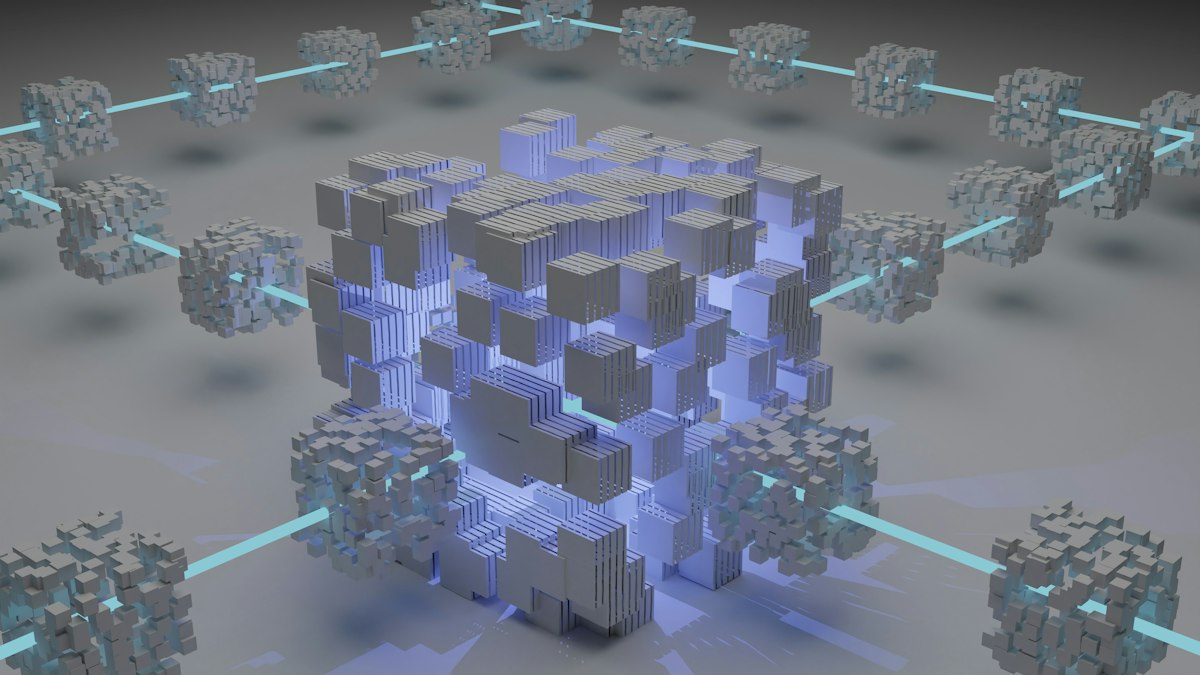
Figure 1: Lattice-based cryptography introduces complex multi-dimensional geometric problems.
3. Crypto-Agility: The Architecture of Survival
The transition to PQC won't be a simple "update." The new keys are larger, the computations are heavier, and the integration points are vast. Hard-coding algorithms into your applications is no longer viable.
We advocate for Crypto-Agility. This is an architectural approach where cryptographic primitives are abstracted away from the application logic. This allows organizations to swap out encryption standards instantly—without rewriting code—if a vulnerability is discovered in the future.
4. The LeadSpark Migration Framework
Migrating to a quantum-safe environment is a multi-year journey. We guide our enterprise partners through a rigorous four-step protocol:
- Discovery: Automated scanning of your entire IT estate to identify every instance where cryptography is used.
- Triage: Classifying data based on sensitivity and longevity. Not everything needs PQC immediately; high-value assets come first.
- Hybrid Deployment: Implementing PQC alongside traditional encryption (Hybrid Mode). This ensures backward compatibility while providing quantum resistance.
- Validation: Stress-testing the new protocols to ensure they don't degrade system performance or latency.
Secure Your Legacy
Q-Day is coming. Whether it happens in 2029 or 2035, the data you generate today is liable. LeadSpark helps forward-thinking organizations build their quantum firewall now.
Request Security Audit